Retirement Income & Investments
How Much to Retire on the Sunshine Coast (2026)
Understanding how much money you need is crucial. So, how much money do I actually need to retire? Let’s break down the numbers.

Figures checked 6 October 2026. Age Pension rates and deeming thresholds are next indexed on 20 March 2027.
Key Takeaways
- ASFA estimates a homeowner couple retiring at 67 needs around $730,000 in super for a comfortable retirement, and a single person around $630,000. These assume you draw down your savings and get a part Age Pension.
- Super Consumers Australia’s targets, published on Moneysmart, are lower for a medium spending level: around $432,000 for a homeowner couple and $322,000 for a single person at 65, spending about $64,000 and $44,000 a year. They also assume you get any Age Pension you’re entitled to.
- From 20 September 2026, the full Age Pension, including supplements, is up to $1,866 a fortnight for a couple combined and $1,237.70 for a single person.
- For many people, the goal isn’t a single big number. It’s turning super into a regular income they feel comfortable spending.
At Sunlit Path, we help Sunshine Coast locals plan their life after work, not just their money. That includes looking at how super and any Age Pension could work together as a regular pay packet.
The Retirement Fear Nobody Talks About
Turning 60 is a big deal.
Ultimately, the question remains: How much money do I actually need to retire comfortably and enjoy your golden years?
Work starts to feel heavy. Retirement goes from a far-off dream to something that is actually happening soon. And after all those years of saving, something strange happens.
You stop being scared of running out of money. You get scared of spending it.
We see it all the time. Good, hard-working people on the Sunshine Coast who won’t buy a coffee at their local cafe. People who cancel a trip because they do not know if they can afford it. People who lie awake worrying, even though they have worked hard their whole lives.
You deserve better than that. So let us find your number together.
What Does a Comfortable Retirement Actually Cost in 2026?
There are two well-known benchmarks, and they measure different spending levels. Both are useful.

ASFA’s Comfortable and Modest Budgets
ASFA stands for the Association of Superannuation Funds of Australia. Every year they work out what it costs to live a comfortable retirement life. We are talking private health cover, a decent car, and a holiday or two each year.
ASFA updates its budgets each quarter as prices change. In its June quarter 2026 update, it reported that electricity and health costs for retirees rose faster than general inflation over the year.
ASFA’s yearly budgets for homeowners aged 65–84 (June quarter 2026), and the super balance ASFA estimates is needed at 67 (revised February 2026):
| Your Situation | Annual Spending | Super Balance Needed |
|---|---|---|
| Comfortable Couple | $78,998 a year | $730,000 |
| Comfortable Single | $56,166 a year | $630,000 |
| Modest Couple | $52,690 a year | $120,000 |
| Modest Single | $36,548 a year | $110,000 |
Super Consumers Australia’s Savings Targets
ASFA’s numbers aren’t the only guide.
Super Consumers Australia (SCA) publishes retirement savings targets on Moneysmart. They show how much super you might need at 65 for low, medium and high spending, assuming you own your home and get the Age Pension you’re entitled to.
SCA’s medium-spending targets (homeowners, at 65):
| Your Situation | Annual Spending | Super Balance Needed |
|---|---|---|
| Medium Couple | $64,000 a year | $432,000 |
| Medium Single | $44,000 a year | $322,000 |
Why is this lower? Mostly because the spending level is lower: $64,000 a year for a couple, against ASFA’s comfortable budget of $78,998. Both sets of numbers assume you own your home and get any Age Pension you’re entitled to. At the medium level, SCA assumes the Age Pension funds about 70% of a couple’s spending and 67% of a single person’s.
What Happens Between Age 60 and 67?
Here is something most retirement articles skip over, and it is important.
Once permanently retired, you can access your super from age 60. But the Age Pension does not start until age 67. That can be a seven-year window where you’re living off your own savings, without the Age Pension.
This is one of the most overlooked stretches in retirement planning. Spend too freely in your early sixties and you arrive at 67 with a much smaller balance than you planned. Spend too cautiously and you waste the healthiest, most active years of your retirement sitting on money you are too scared to use.
The answer is to think of retirement in two clear phases.
Phase One is the bridge years, from 60 to 67. During this period, your super and other savings may need to cover your living costs without the Age Pension. You need a specific income plan for this stretch that is separate from your long-term strategy.
Phase Two begins at 67 when, if eligible, the Age Pension switches on. From this point, the Age Pension, if you qualify, may cover part of your everyday costs, and your super tops up the rest.
When you plan both phases from the start, you get a clearer picture of what you might spend at 60, not just at 67. That is what turns a super balance into a retirement you can actually live.
What About $800,000?
Many people asking this question have a figure in mind, often around $800,000. Here’s what the Age Pension rules could mean at that level.
Illustration only — fictional people, rounded numbers, using Age Pension rates and limits from 20 September 2026. Both examples are homeowners aged 67 or over, and $800,000 is their total assessable assets, all in super and savings. It isn’t a forecast or a recommendation.
A couple with $800,000: that’s $301,000 above the $499,000 full-pension limit for a homeowner couple. Under the assets test, the pension reduces by $3 a fortnight for every $1,000 over the limit, about $903 a fortnight. That leaves roughly $960 a fortnight between them, or about $25,000 a year. Centrelink also runs the income test, using deeming, and pays whichever result is lower. For this couple, the assets test gives the lower result. ASFA’s comfortable budget for a homeowner couple is $78,998 a year, so in this example the rest, roughly $54,000 a year, would come from their own money. As the balance falls, the Age Pension would generally rise. How long the money lasts depends on returns, spending and future rule changes, and that is what a plan works through.
A single person with $800,000: that’s above the $745,750 cut-off for a single homeowner, so they wouldn’t get a part pension under the assets test until their assessable assets fall below that point.
ASFA’s lump sums ($730,000 for a couple, $630,000 for a single person) assume you draw down all your capital and get a part Age Pension. They’re broad benchmarks, not a test you pass or fail.
How Does the Age Pension Work in 2026?
Think of the Age Pension like a regular payment from the government to help you live in retirement. You can get it from age 67 if you meet the various eligibility rules.
How much does it pay for the full pension?
- $1,866per fortnight
Couples (combined) - $1,237.70per fortnight
Singles
(maximum rates including supplements, from 20 September 2026)
Centrelink uses two checks to decide what you get. They look at how much money you earn (the income test) and how much you own (the assets test). For example, from 20 September 2026 a single homeowner can have up to $333,000 in assessable assets (not counting the home) and still get the full pension, and a part pension stops at $745,750. For a homeowner couple, the limits are $499,000 and $1,121,000 combined. Centrelink works out the rate under both tests and pays the lower result.
Not sure whether you’d be eligible? Services Australia’s Payment and Service Finder can give you an estimate. Eligibility depends on your age, residence, and the income and assets tests.
What Are Deeming Rates? (And Why They Matter Now)
Here is a simple way to understand deeming rates.
Imagine Centrelink says: “We think your savings are earning 3.75% a year.” It does not matter if they are earning more or less than that. Centrelink uses that made-up number to decide how much pension you get.
From 20 September 2026, the deeming rates are 1.75% on the first $66,800 of a single person’s financial assets ($110,600 combined for a couple where at least one of you gets a pension), and 3.75% on anything above that.
When deeming rates rise, deemed income rises, which can reduce a part pension under the income test. How your money is held can affect how it’s assessed. For example, some lifetime income streams are assessed differently. Whether any of that suits you depends on your circumstances.

What If My Super Balance Is Not at the Target Yet?
Do not panic. There are real things you can do to make your money go further.
Strategy 1: Income Layering
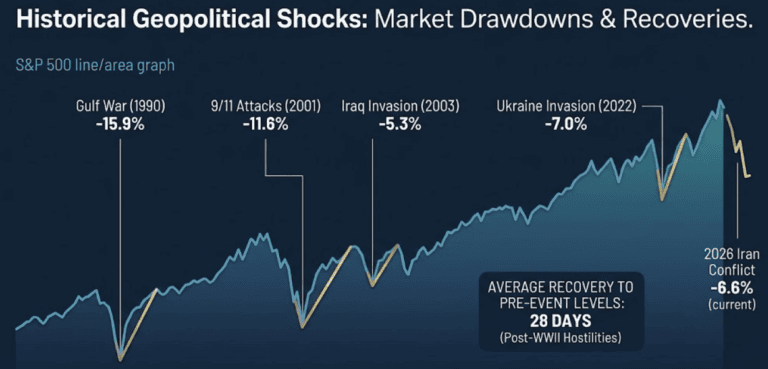
Keeping all your retirement money in one investment mix can create a timing problem, something we call the Bad Timing Tax. If markets fall just as you start drawing an income, you may have to sell investments at a low point, and that can leave less to recover later.
One way some people approach this is to think in layers:
- The Age Pension layer: checking whether you qualify for any Age Pension, and how your assets and income are assessed.
- A lifetime income layer: a lifetime annuity or other lifetime income stream pays an income for life. Some are indexed and others aren’t, so read the product’s PDS and TMD. Lifetime income streams bought on or after 1 July 2019 that meet the rules are assessed differently: generally 60% of the purchase price counts under the assets test until age 84 (or at least 5 years), then 30%, and 60% of the payments count under the income test.
- A flexible layer: an account-based pension for growth investments and access to your money.
- A legacy layer: money set aside for family or causes you care about.
Whether any of these layers suits you depends on your circumstances.
Strategy 2: The Work Bonus
You do not have to stop working completely to enjoy retirement. The government rewards people who keep earning a little with something called the Work Bonus.
For eligible pensioners, up to $300 a fortnight of work income isn’t counted under the income test. Unused amounts build up as a Work Bonus balance of up to $11,800, which can offset future work income. This is great if you do some seasonal work, a short contract, or a bit of consulting.
Strategy 3: The 2026 Contribution Cap Increases
From 1 July 2026, the caps rose with indexation.
- Pre-tax contributions: up to $32,500 a year
- After-tax contributions: up to $130,000 a year
- Transfer balance cap (the most you can move into retirement-phase pension accounts over your lifetime): $2.1 million
- Downsizer contributions: up to $300,000 per person (or $600,000 for an eligible couple) if you’re 55 or older and sell a home you’ve owned for at least 10 years, among other conditions
If you are still working, even part-time, these higher limits give you a real chance to top up your balance before you finish.
Does the New Division 296 Tax Affect Me?
You might have heard scary things in the news about a new super tax. Here is the plain truth.
From 1 July 2026, Division 296 adds an extra 15% tax on the share of your super earnings linked to the part of your total super balance above $3 million, and a further 10% on the share linked to the part above $10 million (thresholds for 2026–27, indexed in future years). The tax applies to individuals, whether they invest with a super fund or have a self-managed super fund (SMSF).
It only affects people whose total super balance is above $3 million.
For 2026–27, it’s measured at 30 June 2027. If your total super balance is below $3 million, Division 296 doesn’t apply. Separately, super withdrawals from a taxed fund are generally tax-free once you’re 60.
How We Approach It
- We start with the income you’d like each fortnight, not just the balance.
- We look at setting aside some cash for near-term spending, so a market fall is less likely to force a sale at a bad time.
- We plan around the life you want after work, including time, health, people and place, not just the numbers.
Whether any of this suits you depends on your circumstances.
The goal is not to die with the most money. The goal is to live the life you worked for.
The Bottom Line
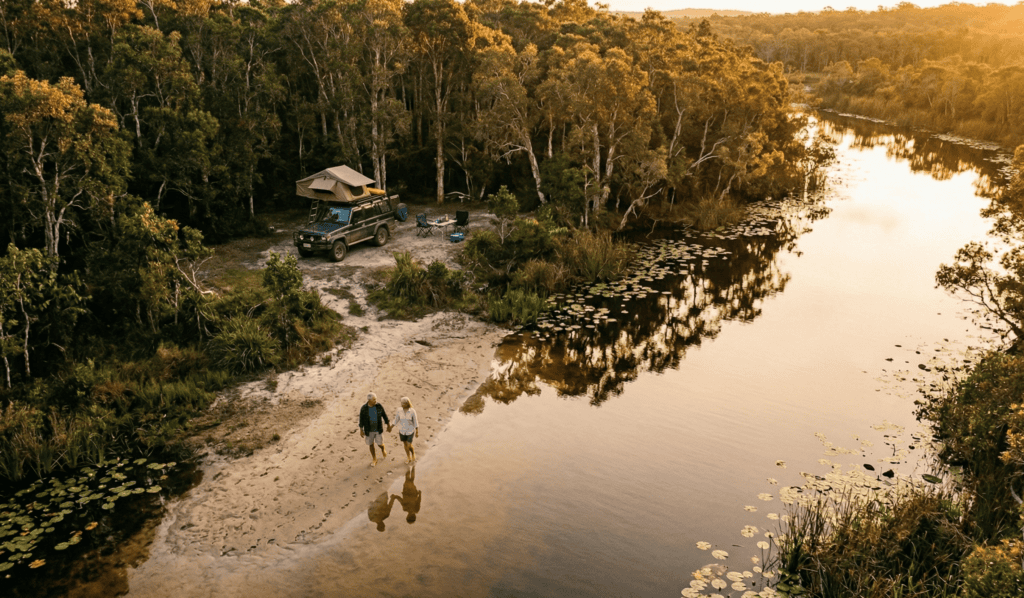
There is no single magic number that works for everyone. You might want to buy a caravan and drive around Australia. You might just want a quiet, happy life near the beach.
Either way, your number depends on how you want to live, what you own, and whether you qualify for a part Age Pension. Seeing those pieces side by side is a good first step.
Client reviews
Verified client reviews for Simon Pederson on Adviser Ratings. Click here to read all our verified client reviews via Adviser Ratings.
Kathy, 56 – 65 years, Mountain Creek, QLD
From there Simon laid out the path forward, step by step, in a way that I could understand. I trust Simon, and we have created a great relationship during our meetings. I can ask him anything. If I am not sure he will explain it in a way I understand.
Garth, 56 – 65 years, Buderim, QLD
Simon was able to present his recommendations in a "down to earth" manner that particularly resonated with my wife and me — they made sense and we felt that he had taken on board our "plans" for the early years of our retirement, whilst still catering for the longer term.
Kellie, 46 – 55 years, Bli Bli, QLD
We are very grateful for his experience and straight forward approach and will recommend him to anyone who needs to get their future in order.


Ready to Stop Guessing?
I’m Simon Pederson, Founder and Lead Retirement Planner at Sunlit Path® Retirement Partners.
A Fit Check is a 30-minute conversation with me, by phone or video call. We talk about where you are now and what you’d like retirement to look like, and see whether we’re a good fit to work together.
It’s not personal advice, so it won’t tell you what you should do. If we are a good fit, I’ll explain the next steps and what advice would cost.
Frequently Asked Questions
People also ask the following:
How much super do I need to retire comfortably in Australia in 2026?
According to ASFA, couples need $730,000 and singles need $630,000 for a comfortable retirement. Super Consumers Australia’s medium-spending targets are about $432,000 for a homeowner couple and $322,000 for a single person at 65. At that level, SCA assumes the Age Pension funds about 70% (couple) and 67% (single) of spending.
Can I access my super before the Age Pension starts?
If you were born on or after 1 July 1964, your preservation age is 60. You can generally access your super once you’ve reached it and retired, or from 65 even if you’re still working. The Age Pension doesn’t start until 67, so between 60 and 67 your super and other savings may need to cover your living costs without the Age Pension. It can help to plan this bridge phase separately from your post-67 strategy.
Can I get the Age Pension if I own my home?
Yes. Your home isn’t counted in the assets test. From 20 September 2026, a single homeowner can have up to $333,000 in other assessable assets and get the full Age Pension, and a part pension stops at $745,750. For a homeowner couple, the limits are $499,000 and $1,121,000 combined. The income test also applies.
What are the super contribution caps in 2026?
From 1 July 2026, you can put in up to $32,500 pre-tax and $130,000 after-tax per year. The transfer balance cap, the most you can move into retirement-phase pension accounts, is $2.1 million for 2026–27.
What is the Division 296 super tax and does it affect me?
From 1 July 2026, Division 296 adds an extra 15% tax on the share of earnings linked to the part of your total super balance above $3 million, and a further 10% above $10 million (2026–27 thresholds). If your total super balance is below $3 million, it doesn’t apply.
What are the current deeming rates in Australia?
From 20 September 2026, the deeming rates are 1.75% on the first $66,800 of a single person’s financial assets ($110,600 combined for a couple where at least one gets a pension) and 3.75% above that. Deemed income counts in the income test, so it can affect a part pension.
What is the Age Pension age in Australia?
The Age Pension age is 67 for both men and women. It applies to everyone born on or after 1 January 1957.
What is the downsizer contribution rule?
If you’re 55 or older and sell a home you’ve owned for at least 10 years, you may be able to contribute up to $300,000 per person into super as a downsizer contribution, if you meet the other conditions. It doesn’t count toward the contribution caps, but it does count toward your total super balance and may affect the Age Pension.
How much super does a couple need for a comfortable retirement on the Sunshine Coast in 2026?
ASFA estimates a homeowner couple retiring at 67 needs about $730,000 combined for a comfortable lifestyle, assuming a part Age Pension. Super Consumers Australia’s medium-spending target for a homeowner couple at 65 is about $432,000. ASFA’s figures are national, not specific to the Sunshine Coast.
How does retirement cost of living on the Sunshine Coast compare to capital cities?
We haven’t found an official comparison. ASFA’s budgets are national averages, so it’s worth checking your own expected costs against them.
Sources
No representation is given, warranty made, or responsibility taken about the accuracy, timeliness or completeness of information sourced from third parties. Because of this, we recommend you consider, with or without the assistance of a financial adviser, whether the information is appropriate having regard to your particular circumstances.
- ASFA — Retirement Standard, June quarter 2026: yearly budgets for homeowners aged 65–84 (comfortable $78,998 couple, $56,166 single; modest $52,690 couple, $36,548 single). Lump sums revised February 2026, for homeowners retiring at 67 with a part Age Pension (comfortable $730,000 couple, $630,000 single; modest $120,000 couple, $110,000 single). https://www.superannuation.asn.au/consumers/retirement-standard/ — checked 6 October 2026.
- ASFA — media release, June quarter 2026 Retirement Standard (electricity and health costs rising faster than inflation). https://www.superannuation.asn.au/media-release/asfa-retirement-standard-retirees-living-costs-rising-faster-than-inflation-as-power-healthcare-insurance-bills-climb/ — checked 6 October 2026.
- Moneysmart (ASIC) — Super Consumers Australia’s retirement savings targets (January 2026): medium spending $64,000 a year couple → $432,000; $44,000 single → $322,000 by 65; Age Pension assumed to fund 70% (couple) and 67% (single). https://moneysmart.gov.au/glossary/super-consumers-australias-retirement-savings-targets — page updated 5 May 2026; checked 6 October 2026.
- Services Australia — How much Age Pension you can get: maximum $1,237.70 a fortnight single, $1,866 couple combined, including supplements, from 20 September 2026. https://www.servicesaustralia.gov.au/how-much-age-pension-you-can-get — page updated 20 September 2026; checked 6 October 2026.
- Services Australia — Assets test for Age Pension: homeowner full-pension limits $333,000 single and $499,000 couple combined; part-pension cut-offs $745,750 and $1,121,000. https://www.servicesaustralia.gov.au/assets-test-for-age-pension — page updated 20 September 2026; checked 6 October 2026.
- Department of Social Services — Social Security Guide 4.2.3: assets test taper of $3 a fortnight for every $1,000 over the full-pension limit (single, or couple combined). https://guides.dss.gov.au/social-security-guide/4/2/3 — last reviewed 12 August 2024; checked 6 October 2026.
- Department of Social Services — Social Security Guide 4: the rate is worked out under both the income and assets tests, and the lower result applies. https://guides.dss.gov.au/social-security-guide/4 — checked 6 October 2026.
- Services Australia — Income test for Age Pension: free area $226 a fortnight single, $396 couple combined. https://www.servicesaustralia.gov.au/income-test-for-age-pension — page updated 20 September 2026; checked 6 October 2026.
- Services Australia — Deeming: 1.75% on the first $66,800 (single) or $110,600 (couple, at least one on a pension), 3.75% above. https://www.servicesaustralia.gov.au/deeming — page updated 20 September 2026; checked 6 October 2026.
- Services Australia — Who can get Age Pension: Age Pension age is 67. https://www.servicesaustralia.gov.au/who-can-get-age-pension — page updated 1 December 2025; checked 6 October 2026.
- Services Australia — How the Work Bonus works: $300 a fortnight; maximum balance $11,800. https://www.servicesaustralia.gov.au/how-work-bonus-works — page updated 14 February 2025; checked 6 October 2026.
- Services Australia — Income streams: lifetime income streams bought on or after 1 July 2019 that meet the capital access schedule are assessed at 60% of the purchase price until age 84 (minimum 5 years), then 30%, with 60% of payments counted as income. https://www.servicesaustralia.gov.au/income-streams — page updated 26 May 2026; checked 6 October 2026.
- ATO — Contributions caps: concessional $32,500 and non-concessional $130,000 for 2026–27. https://www.ato.gov.au/tax-rates-and-codes/key-superannuation-rates-and-thresholds/contributions-caps — page updated 11 September 2026; checked 6 October 2026.
- ATO — Transfer balance cap: $2.1 million for 2026–27. https://www.ato.gov.au/tax-rates-and-codes/key-superannuation-rates-and-thresholds/transfer-balance-cap — page updated 27 April 2026; checked 6 October 2026.
- ATO — Downsizer super contributions: up to $300,000 per eligible person, aged 55 or older, home owned for 10 or more years, other conditions apply. https://www.ato.gov.au/individuals-and-families/super-for-individuals-and-families/super/growing-and-keeping-track-of-your-super/how-to-save-more-in-your-super/downsizer-super-contributions — page updated 20 January 2026; checked 6 October 2026.
- ATO — Payments from super: preservation age 60 for anyone born from 1 July 1964; super lump sums from a taxed source are non-assessable, non-exempt income from age 60. https://www.ato.gov.au/tax-rates-and-codes/key-superannuation-rates-and-thresholds/payments-from-super — page updated 16 September 2026; checked 6 October 2026.
- ATO — Division 296 tax on large super balances: extra 15% on earnings linked to the part of the total super balance above $3 million, and a further 10% above $10 million (2026–27 thresholds, CPI-indexed). https://www.ato.gov.au/individuals-and-families/super-for-individuals-and-families/super/growing-and-keeping-track-of-your-super/caps-limits-and-tax-on-super-contributions/division-296-tax/division-296-tax-on-large-super-balances — page updated 29 June 2026; checked 6 October 2026.
- Federal Register of Legislation — Treasury Laws Amendment (Building a Stronger and Fairer Super System) Act 2026 (No. 8, 2026). https://www.legislation.gov.au/C2026A00008/asmade/details — checked 6 October 2026.
- ATO — When you can withdraw your super: conditions of release include reaching your preservation age and retiring, or turning 65 even if you’re still working. https://www.ato.gov.au/individuals-and-families/super-for-individuals-and-families/super/withdrawing-and-using-your-super/super-withdrawal-options — page updated 10 July 2026; checked 6 October 2026.