Retirement Income & Investments
Should I Downsize for Retirement? Sunshine Coast
Thinking about downsizing your home for retirement? For some people it can unlock cash, cut weekend chores, and — if you meet the rules — let you put up to $300,000 per person into super using the downsizer contribution. Whether it suits you depends on your home, your other assets, and how you want to live.

Figures checked 7 October 2026. Downsizer contribution rules and Age Pension assets-test limits are current as at that date; Age Pension rates and deeming thresholds are next indexed on 20 March 2027.

Key Takeaways
- At Sunlit Path we talk about rightsizing rather than downsizing: making sure your home is a launchpad for the life you want, not a chore that eats your weekends.
- Under ATO rules, if you are 55 or older you may be able to make a downsizer contribution of up to $300,000 per person (or $600,000 for an eligible couple) from the sale of your primary home. It does not count toward the usual contribution caps, but it does count toward your total super balance and can affect the Age Pension.
- Your family home is exempt from the Age Pension assets test. Cash left over after you buy the next home is not — so check the Centrelink impact before you put up a for-sale sign.
The kids have moved out. The four-bedroom house is quiet. You spend your weekends mowing a lawn you barely use.
You love your home. It holds 30 years of family memories. But lately, the maintenance feels heavy. You want to travel. You want to spend Tuesday mornings walking near the water. Instead, you’re stuck cleaning empty rooms.
You might also be feeling the lifestyle squeeze. Your home is worth a fortune on paper, but you can’t buy groceries or book a holiday with bricks and mortar. You are “house rich but cash poor.”
The decision to downsize is deeply emotional. Getting it right can change your life after work.
Let’s look at how trading your family home for a better base can fund your freedom.
Why Your Home Should Be a Launchpad
Most people view their home purely as a financial asset. We view it differently. Your home is the stage where your retirement plays out.
We treat the home as part of how you live in retirement — what we call Place — not only as an asset.
For decades, your home was a warehouse for a busy family. Now it needs to serve a new purpose. It must support your future health, not your past history.
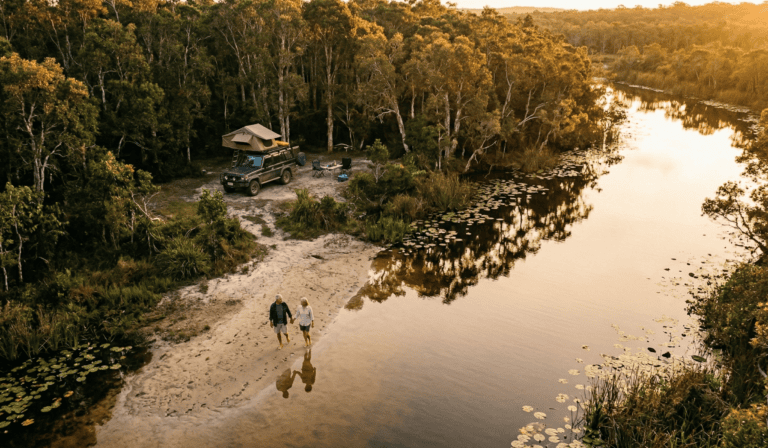
If you want an active retirement, your home needs to make that easy. Moving to a smaller place near the water in Caloundra puts you steps away from flat walking paths, which naturally nudges you to move more. It keeps you out of the gym and in the real world.
If you hate maintenance, a modern apartment removes the friction. You lock the door and drive off in the caravan for three months. No guilt, no overgrown lawns.
Your home should be a launchpad for adventure. It shouldn’t be an anchor that weighs you down.
The Math: Turning Bricks Into a Reliable Pay Packet
The biggest benefit of downsizing is unlocking trapped wealth.
Many everyday achievers hit age 60 with a great house but not enough superannuation. They fear they’ll run out of money. Downsizing helps close this gap.
By selling a large home and buying something smaller, some people unlock cash. That cash can be used — if it suits their circumstances — as part of a plan for regular retirement income.
The government actually encourages this through the downsizer contribution scheme. If you’re 55 or older, you can put up to $300,000 from the sale of your home straight into your super. A couple can put in up to $600,000 combined.
Why does this matter?
- It doesn’t count toward your normal annual contribution caps.
- It moves money from a taxable environment into a tax-free pension environment (once you’re eligible to start a pension account).
- It turns a lazy asset, like a spare bedroom, into a reliable income stream.
For some people, turning part of the sale into super or savings is how they fund day-to-day spending after they move.
(Note: to qualify, you or your spouse generally need to have owned the home for at least 10 years, and the contribution needs to be made within 90 days of settlement.)
Age Pension assets test: what changes when you sell
Before you put a for-sale sign up, it helps to know how Centrelink treats leftover cash.
Your primary home is exempt from the Age Pension assets test. It doesn’t matter if your house is worth $800,000 or $3 million — Services Australia does not count it.
But cash left over after you buy the next home is not exempt.
Illustration only — fictional people, rounded numbers, using Age Pension assets-test limits from 20 September 2026. It isn’t a forecast or a recommendation, and it ignores selling and buying costs.
If someone sold a $1.5 million home and later bought an $800,000 townhouse, the leftover cash — about $700,000 before costs — would count under the assets test once it was no longer covered by the sale-proceeds exemption. From 20 September 2026, a single homeowner’s part pension stops at $745,750 of assessable assets, and a homeowner couple’s at $1,121,000 combined, so a leftover around that size can reduce a pension, or stop it, depending on what else they own. Centrelink also runs the income test (including deeming) and pays the lower result.
Sale proceeds you genuinely intend to use to buy, build, repair or renovate a new principal home can be exempt from the assets test for up to 24 months from settlement for sales from 1 January 2023 (extendable in some cases). The leftover after you buy is what usually counts. See Services Australia — Real estate assets.
That doesn’t make downsizing a bad idea. It means it’s worth checking the Centrelink outcome before you sell. Services Australia’s Financial Information Service can walk through an estimate.
Choosing Your Next Base on the Sunshine Coast
When looking at downsizing Sunshine Coast retirement options, you have choices.
You could buy a smaller freehold house, an apartment, or look at retirement communities.
Land-lease (manufactured home / residential park) communities and retirement villages work under different Queensland rules.
In many land-lease communities you own the home and pay site rent for the land. Site fees can count toward Rent Assistance if you get an eligible payment — check Services Australia.
Retirement village contracts vary (ingoing contribution, loan or licence). Exit fees and how your exit entitlement is worked out are set out in the village contract and the Retirement Villages Act 1999 (Qld). Read the disclosure documents and get legal advice before you sign. QLD Gov and Seniors Rights Queensland have plain-English guides.
If you’d like to talk through how a move might sit with your Age Pension and cash buffer, a Fit Check is a 30-minute conversation with Simon, by phone or video call, to see whether we’re a good fit. It’s not personal advice.
We start with how you want to live, not only the sale price. We look at the Centrelink and tax timing around a move, and whether a downsizer contribution suits the rules. Whether any of that suits you depends on your circumstances.
Explore more
- Read How much money do I actually need to retire? (2026 figures).
- Learn about the Path to Prosperity.
- See how we approach income streams and annuities.
Is Packing Up Really Worth It?
The hardest part of downsizing isn’t the math. It’s the memories.
If the Age Pension is part of your plans, read how downsizing affects the Age Pension before you sell.
Packing up a long-time family home takes time and energy. Some people put the decision off and then have to move quickly after a health change, when the options are narrower.
If you are thinking about a move, doing it while you still have time to choose can mean more say over the location and the timing. Whether and when to move is a personal decision.
Client reviews
Verified client reviews for Simon Pederson on Adviser Ratings. Click here to read all our verified client reviews via Adviser Ratings.
Kathy, 56 – 65 years, Mountain Creek, QLD
From there Simon laid out the path forward, step by step, in a way that I could understand. I trust Simon, and we have created a great relationship during our meetings. I can ask him anything. If I am not sure he will explain it in a way I understand.
Garth, 56 – 65 years, Buderim, QLD
Simon was able to present his recommendations in a "down to earth" manner that particularly resonated with my wife and me — they made sense and we felt that he had taken on board our "plans" for the early years of our retirement, whilst still catering for the longer term.
Kellie, 46 – 55 years, Bli Bli, QLD
We are very grateful for his experience and straight forward approach and will recommend him to anyone who needs to get their future in order.


Ready to Rethink Your Living Space?
I’m Simon Pederson, Retirement Planner and founder of Sunlit Path Retirement Partners.
For over 15 years, I’ve helped Sunshine Coast locals navigate the rules of downsizing and retirement income.
A Fit Check is a 30-minute conversation with me, by phone or video call. We talk about where you are now and what you’d like retirement to look like, and see whether we’re a good fit to work together.
It’s not personal advice, so it won’t tell you what you should do. If we are a good fit, I’ll explain the next steps and what advice would cost.
- Will selling the house reduce or cancel my Age Pension?
- How much could I draw as a regular pay packet from the leftover cash?
- Should I look at a retirement village, a land-lease community, or a smaller residential home?
Frequently Asked Questions
How much can I put into super from selling my house?
If you’re 55 or older and meet the rules, you can contribute up to $300,000 from the sale of your primary home into super as a downsizer contribution. An eligible couple can contribute up to $600,000 combined. You or your spouse generally need to have owned the home for at least 10 years, and the contribution usually needs to be made within 90 days of receiving the sale proceeds. It doesn’t count toward the usual contribution caps, but it does count toward your total super balance and may affect the Age Pension.
Can I downsize and keep my Age Pension?
It depends. Your family home isn’t counted in the assets test, but cash left over after you buy the next place is. From 20 September 2026, a single homeowner’s part pension stops at $745,750 of assessable assets, and a homeowner couple’s at $1,121,000 combined. Sale proceeds you plan to use on a new principal home can be exempt for up to 24 months in some cases. A large leftover after you buy can reduce or cancel a pension, so it pays to model the Centrelink outcome before you sell.
When is the best time to downsize for retirement?
There isn’t one best time. Some people prefer to move while they still have energy to choose the location and the timing, rather than after a health change forces a faster decision. Whether and when to move depends on your circumstances.
Who qualifies for the downsizer super contribution?
You must be aged 55 or older when you make the contribution. The home must be in Australia, owned by you or your spouse for at least 10 years, and must have qualified as your main residence for at least part of that time. Other ATO conditions apply — check the ATO downsizer page or speak with your fund.
Sources
No representation is given, warranty made, or responsibility taken about the accuracy, timeliness or completeness of information sourced from third parties. Because of this, we recommend you consider, with or without the assistance of a financial adviser, whether the information is appropriate having regard to your particular circumstances.
- ATO — Downsizer super contributions: up to $300,000 per eligible person aged 55 or older; home owned for 10 or more years; contribute within 90 days of receiving the sale proceeds; other conditions apply. Does not count toward concessional or non-concessional caps. https://www.ato.gov.au/individuals-and-families/super-for-individuals-and-families/super/growing-and-keeping-track-of-your-super/how-to-save-more-in-your-super/downsizer-super-contributions — page updated 20 January 2026; checked 7 October 2026.
- Moneysmart (ASIC) — Downsizer super contributions: plain-language eligibility and how a couple can each contribute up to $300,000. https://moneysmart.gov.au/grow-your-super/downsizer-super-contributions — last updated 29 September 2026; checked 7 October 2026.
- Moneysmart (ASIC) — Downsizing in retirement: lifestyle, costs and Centrelink considerations. https://moneysmart.gov.au/manage-your-money-in-retirement/downsizing-in-retirement — last updated 22 July 2026; checked 7 October 2026.
- Services Australia — Assets test for Age Pension: from 20 September 2026, homeowner full-pension limits $333,000 single and $499,000 couple combined; part-pension cut-offs $745,750 and $1,121,000. Non-homeowner limits are higher. The family home is not counted. https://www.servicesaustralia.gov.au/assets-test-for-age-pension — page updated 20 September 2026; checked 7 October 2026.
- Services Australia — Real estate assets: sale proceeds you plan to use to buy, build, rebuild, repair or renovate a new principal home may be exempt from the assets test for up to 24 months from settlement for sales from 1 January 2023 (further extension possible). Leftover funds are assessable; deeming still applies. https://www.servicesaustralia.gov.au/real-estate-assets — page updated 5 June 2026; checked 7 October 2026.
- Services Australia — Financial Information Service (FIS): government education about payments and options. https://www.servicesaustralia.gov.au/financial-information-service — checked 7 October 2026.
- Queensland Government — Retirement villages: contracts, exit fees and the Retirement Villages Act 1999 (Qld). https://www.qld.gov.au/housing/buying-owning-home/housing-options-in-retirement/retirement-villages — checked 7 October 2026.
- Queensland Government — Manufactured homes and land-lease communities (residential parks). https://www.qld.gov.au/housing/buying-owning-home/housing-options-in-retirement/manufactured-homes — checked 7 October 2026.
- COTA Australia — national advocacy for older Australians on housing and retirement. https://www.cota.org.au/ — checked 7 October 2026.